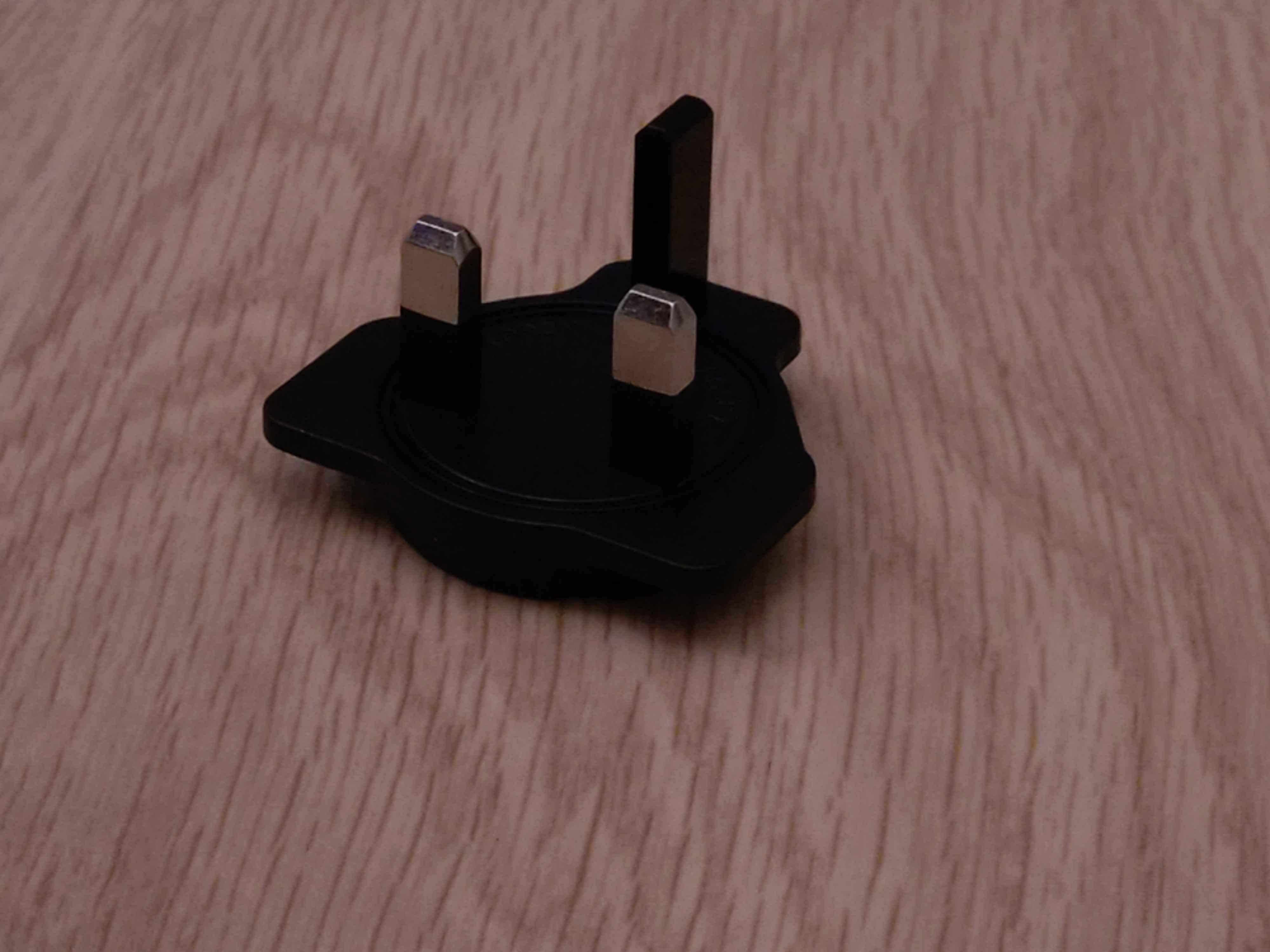
People who joke about legos haven’t stepped on this bad boy
UK sockets usually have switches on them. There’s no need to unplug things when you’re not using them.
Also, Lego is a collective noun. Saying legos is exactly like saying sheeps.
Submitted 10 months ago by markz@suppo.fi to mildlyinfuriating@lemmy.world
https://suppo.fi/pictrs/image/2c865603-688d-4d7f-8303-fc82703518a4.jpeg
People who joke about legos haven’t stepped on this bad boy
UK sockets usually have switches on them. There’s no need to unplug things when you’re not using them.
Also, Lego is a collective noun. Saying legos is exactly like saying sheeps.
Boy I bet youre fun at parties
The ladies flock to me for my witty pedantic corrections.
I think the switches are nice but in the modern world you really don’t need to unplug a vast majority of things. Even my $30 120V USA space heater shuts itself off if it tips over or gets too hot. My cell phone charger pulls functionally 0W while idling.
They do some things right in the UK. But does every toilet need to be hidden in a basement labyrinth?
Oh yes, definitely. Otherwise the Minotaur might escape and frighten the other railway station users when he should be enforcing the unwritten rules of the urinal.
But what about when you need to plug your hair dryer in and need to remove a lamps plug and it ends up on the floor and then you get a knock at the door and its your friend and you go out and forget all about it until you get home and completely fuck your own feet
Why not drop the plug at the wall, not in the middle of the floor, or get a multisocket? £3.99 at Argos for a little one.
There’s also no real reason to unplug something, even if the plug isn’t switched. Modern electrical appliances have idle power draws of less than a watt.
Rule of thumb: If a small electronic appliance (e.g. phone charger, power brick etc…) isn’t warm to the touch, it’s using less than 1 Watt of power, which at UK electric prices, is less than half a penny per 24 hours.
If you value your own time at UK minimum wage, and it takes you 5 seconds to unplug, and 5 seconds to replug, you won’t break even unless you keep it unplugged for at least 7 days.
Oh and quick PSA: Regardless of it’s whole house protection, or individual socket protection, you should test the function of your RCDs every now and again. Officially at least once a month. Every RCD breaker has a little button somewhere labeled “test”, that connects L to GND across a resistor, to check if the breaker actually does it’s job. If you’ve never done this (and haven’t recently had the RCD trip for an actual fault) GO DO IT NOW. THOSE THINGS ARE LITERALLY LIFE SAVERS AND IT’S IMPORTANT TO MAKE SURE THEY’RE ACTUALLY WORKING.
Such good advice.
This appears to be another North America vs The rest of the English speaking world thing. A collective noun feels weird to my American ears since they are individual pieces that are countable. It’s not a big deal though. I enjoy having different ways of talking.
they are individual pieces that are countable
So are sheep.
it’s sheeple.
If you look at the picture, that’s clearly the front part of a plug without the back cover, disconnected from all wiring and kept on the ground, with the pins facing upwards, to pierce some fascia.
If someone were to insert that plug into a socket as-is, it would still be a death trap as long as the power switch is on.
Which makes it extra amusing to me that they coat the pins or whatever with plastic so you cant accidentally touch live while inserting it.
this is something I’ve heard a lot from people in the UK, do UK electronics not have switches on them or something? all electronics I’ve ever seen living in the US have a power switch on them, do you think we unplug our stuff to turn them off?
I didn’t know you people had only one of them.
I have:
No, but my point was that there’s no need to unplug something and leave the plug on the floor if there’s a switch.
Oh look that’s something ninjas spread on the road when they run.
You just brought back memories of my siblings and I walking around outside barefoot to the point these things penetrated our shoes more easily than our feet.
In rural southern Utah these things are literally everywhere. If you go out with cheap foam flip-flops, the entire bottom of the shoe will embedded with dozens of these seconds after you start walking around lol
Kind of oddly satisfying to pull them out of the soles of shoes tbf
I’ve always heard them called sand spurs, and they’re the devil. Nothing in nature needs to be that sharp, ffs.
At least chestnuts have the decency to be really localized and large, despite being spikey balls of evil. These little fuckers are miniature, everywhere, and can hide in carpet for a solid six months before you notice them the one time you decide to go barefoot.
I’m so glad we don’t have these where I live.
I think you’re thinking of sand burrs. Which I’m pretty sure are different, but also fucking nasty plants. They end up in our poor dogs’ paws late summer/early fall. If I could eliminate any plant. That one.
I’m glad they’ve never managed to puncture my sneakers while hiking, because god knows I’ve had enough embedded in my soles when I check.
I have lost many bike tires to these guys over the years.
i have lost two tires to goatsheads in the last month and i hate it
Do you just casually have those lying around your house? What about sharp glass? Or acid pools? Or tigers?
They come into the house on your clothes, your shoes, my dog’s fur. Yes they end up lying around the house. The number of times I have stepped on one barefoot in the middle of the night is far too high.
But why do you leave power cords lying around?
What a weird sex toy, what shapes are British anuses?!
Boris Johnson is practically leftist compared to Trump.
I would be mildly annoyed at 110v in easy reach with metal with out an isolation switch.
Having switched outlets wouldn’t make US plugs any safer, at least not in any meaningful way.
The individual switches on UK outlets don’t really add significantly to safety, they’re mostly just a convenience feature, because for an electrical plug/outlet to even be considered safe in the first place, it has to be always safe, whether it’s powered or not. You can’t rely on people switching off unused outlets instead of doing actual safety design.
The main factors that make US plugs less safe than UK ones is the potential for exposed metal contacts with a closed connection to the outlet, the lack of internal fuse and the lack of polarisation, and, particularly in combination with the first point, the tendency of comparatively weak grip strength and portruding design that make it easy for a plug to become (partially) unplugged by accident.
One feature of UK plugs I really like is the built in warding of the live/neutral slots. The ground prong is longer to allow for the mechanism to unlock the hot slot when inserted. It’s essentially a built in childproofing.
So how does it work in the US then? Is there a law that everything needs to be isolated very well, no metal shells allowed or people just getting electrocuted from time to time
They are referencing the lack of isolation on the prongs for US plugs. If a US plug isn’t fully inserted, it’s possible for both of the two prongs to form electrical connections with the outlet, whilst not yet being fully inserted.
This means a small part of the prongs which are now at 110V potential to each other is exposed, and could potentially be touched by a child, or cause a short circuit if an object gets into the gap.
So yeah, the electrical code in the US for household plugs is just straight unsafe.
For comparison, on non grounded EU plugs this could also occur. Which is why non grounded EU plugs are required to either have insulation on the upper half of the prongs, or the plug needs to have “shield” that fits into the recessed recepticles we use, thereby blocking access to the prongs.
:) only the strong survive.
An actual answer: you very quickly learn to pull in a way that prevents your fingers from slipping onto the prongs, or you just pull the cord to remove things from outlets. That creates its own long term problems, but most people don’t really give a shit because the US is built off cheap plastic shit that you simply replace when it breaks.
That being said, I’ve received like 5 or 6 good hits of the 110v wake up due to the eccentricities of the US plug. It hurts like a bitch, but probably won’t kill you if you don’t have a pace maker and aren’t grabbing something grounded with the other hand.
We also only use GFCI in the bathroom and kitchen and don’t use RCD breakers. It’s honestly astonishing that the US electrical system doesn’t kill more people.
Never considered that Europeans don't know the wonderful sensation of 110v. It can vary from a slight tingle (it's not even tingle, but I can't describe it) to a "holy shit" moment that throws you back, depending on how and where you touched it and how much current flows. The great thing about A/C is the cycle, unlike a DC current which can lock your muscles and keep you from letting go.
I’ve seen a few videos on these and the benifits of european plug design. My only gripe with it is the size. I know it would be a pain because everything is already built for the the current standard, but an updated “micro” plug would be a lot better.
In fact, why doesn’t the whole world collaborate on a new plug design that takes the best from both and combines into a 110/220 auto sensing plug. Sadly i don’t see that happening any time soon. It’s much more likely that USB-C continues to gain ground and becomes the defacto DC power standard for consumers.
I knew immediately what I was going to see when opening the link haha
a 110/220 auto sensing plug
There’s no real need for a plug to be able to sense what voltage it’s plugged into. That would be handled device side, not plug side. And for devices for which handling both 110 and 220 makes sense, well those pretty much universally already have a switch mode power supply that does so automatically, or at least a dip switch with which a user can manually select their grid voltage (check your phone or laptop charger, I can virtually guarantee it already supports both).
And the issue with devices that don’t already do this, is generally that they are basic resistive or inductive loads (anything along the lines of heaters or motors), with little to nothing in the way of digital control electronics, which need to be designed for a specific input voltage in order to achieve a specific power output. Making these devices both 110V and 220V compatible would require either giving every single one of them a voltage transformer, or to include a 110V motor/heating coil, and a 220V one, that can be switched between. Both of which would massively increase the price of these devices.
You clearly haven’t stepped on a IC chip
100 pins right in the foot
I have, but it was a foot-safe surface mount package
Yeah, but now you can calculate pi to 2000 decimal places.
No proprietary stuff inside my foot, please.
Give me an Open Source RISC V chip and I’ll step on it.
Is it normal for there to be no cord attached to these? That would stop them from facing this way on the floor
American here. I may be in the minority, but I think this plug design is absolutely stupid. I get that it has safety features, that you can put a fuse in the plug, that the outlets have switches, etc etc etc. But it is absolutely fucking huge. Ridiculously huge. And anywhere that you have multiple devices you want to plug in, it is totally impractical because it is so fucking huge.
The fact is, very very few devices need 240v 13A. Yes I get that it is useful to have this ridiculous amount of power so you can boil your tea kettle in 35 seconds, but other than that very few household appliances need anywhere near that amount of power.
So the result is a cell phone charger, which at the very outside is pulling 20 or 30 watts, is plugged into this giant ridiculous monstrosity capable of supplying 3000+ watts. And in reality the only appliances that use anywhere near that much are cooking appliances and space heaters.
Meanwhile the US NEMA 5-15 is good for 1800 watts, plenty to run almost every household appliance, with the longer ground pin and an appropriate outlet it supports tamper resistance shutters, the thin flat pins resist the insertion of foreign objects into the outlet, and you can fit many outlets in a small space.
And it doesn’t destroy your foot when you step on it, as a nice bonus.
in the UK we don’t need conceal carry, those plugs are easily available everywhere and can be used as a Morningstar
It needs an unearthed version without the shutter-opening pin, for things like low-power electronic devices with figure-8 mains sockets, phone chargers and such.
Of course, some BS1363-stan will inevitably show up to argue that as this is a crucial safety feature, unearthed connections should be illegal, much like the Australians who argue that bike helmets should be mandatory in Amsterdam.




Devial@discuss.online 10 months ago
Best plug+receptor design in the world for electrical safety.
Worst plug design in the world for bottom of foot safety.
Horsecook@sh.itjust.works 10 months ago
Devial@discuss.online 10 months ago
No it isn’t. It’s debatable if the safety features are still necessary with modern wiring, but it is objectively safer than any other plug design there is.
And the design of these features wasn’t because of “substandard” wiring. It is because the UK used to use ring circuits in old houses, which are unsuitable to be protected by central fuses/breakers, necessitating fuses in the plugs. That doesn’t make the system any less safe. As long as a fuse is present, and the circuits are adequately sized, where precisely on the circuit a fuse is located is irrelevant.
Also, the fuse inside the plug provides an utterly unique advantage that no other country has: The fuse can be used to protect the external wire from over current. Centralised fuses are exclusively designed to prevent over current on the main, internal circuit, they don’t give a crap what happens on the other side of an outlet. A central fuse will do nothing to stop you from pulling 15Amps thought a 3 amp cable. A fuse inside the plug, appropriately sized for those 3 Amps, will in fact protect the cable itself.
psx_crab@lemmy.zip 10 months ago
Care to elaborate on this? Imo it does sounds like a win if that’s the case.
Krudler@lemmy.world 10 months ago
Thank you for pointing this out. A “good enough” system that downloads all the headaches onto the users. War time shit.
WhatAmLemmy@lemmy.world 10 months ago
Sounds like the problem is people leaving plugs lying on the ground? Otherwise known as user error.
psx_crab@lemmy.zip 10 months ago
Or what they called it: Skill Issue.
thethunderwolf@lemmy.dbzer0.com 10 months ago
Also best for staying in sockets but not getting stuck
toynbee@lemmy.world 10 months ago
You sound like ElectroBOOM.
poopkins@lemmy.world 10 months ago
There’s no UK standard for three-phase and high amperage sockets or plugs. In fact, UK sockets don’t support 16A three-phase at all, so if you have higher power needs (for example for EV charging) you’re left with having to install a dedicated wall box that uses an entirely different connector than the 3-pin UK plug, BS 1363.
Given this incompatibility, how can you argue that UK sockets are better, for instance, than SN 441011?
To say nothing of how comically giant every appliance plug needs to be, regardless of how low its wattage is?
Devial@discuss.online 10 months ago
I did notably just say that the plug is the best in the world for electrical safety. I’ve made no claims of it’s usefulness or convenience outside of that.
I am also unaware of any country on the planet that uses the same plug/connector for general purpose household devices and 3 phase power. The number you provided, SN441011, also just leads to relatively generic household plug that doesn’t seem fit suited for multi phase use either, so not sure what you’re trying to say. I’ve also rarely seen places outside of industrial environments that have multiphase outlets, except in America, which has split phase power, and uses the voltage boost by going phase to phase instead of phase to ground. There’ll you’ll do often find 240V split phase outlets for high power appliances like shop heaters, electric clothes driers or EVSE
It’s a minor nuisance yeah sure, but it also has the nice advantage that there’s no need to fully mould plastic around it. UK plugs are pretty much universally openable, meaning you can repair them yourself if a fuse dies, or one of the wires comes lose. It’s also really easy, and literally all you need is a single screw driver, to swap a working plug over onto a cable who’s plug has broken.
But even so, it’s again not a safety issue so not exactly relevant to my poing.
danny3892@sh.itjust.works 10 months ago
Impossible to plug small plug into big power. I see no problems.