Comment on Just coincidence
redhorsejacket@lemmy.world 3 days agoI feel like there’s a term for this sort of backwards misattribution of a symbol’s later meaning onto examples which predate their modern connotation, but I can’t think of what it would be. The war memorial you’re referring to was dedicated in 1920. Considering fascism as a political ideology had just started coalescing around Mussolini in Italy circa 1919-1920, it strains credulity to link the two. In a similar fashion, you wouldn’t suggest the presence of swastikas outside a Hindu temple indicates support for Nazism by default.
Fasces have represented the strength of the state dating back to the pre-Roman Etruscan kings. Therefore, seeing it on the national architecture of a Western nation which fancies itself as a descendent of Greek and Roman civilizations shouldn’t be that surprising, nor taken as a tacit endorsement of capital-F “Fascist” ideology. Case in point, do you know what’s prominently featured on the cover of every French passport? It ain’t a baguette, I’ll say that much. Heck, in 1953, France elected to keep the fasces as part of their diplomatic emblem, despite their very recent experiences in WW2 under Fascist rule. If we can give France a pass for continuing to use the symbol after post-war, surely that can extend to a 1920 Revolutionary War memorial in America. Unless every example of nationalism is equivalent to Fascism (and I readily grant that nationalism is a core tenant of that ideology, but allowances should be made for nuance), sometimes a fasces is just a fasces.
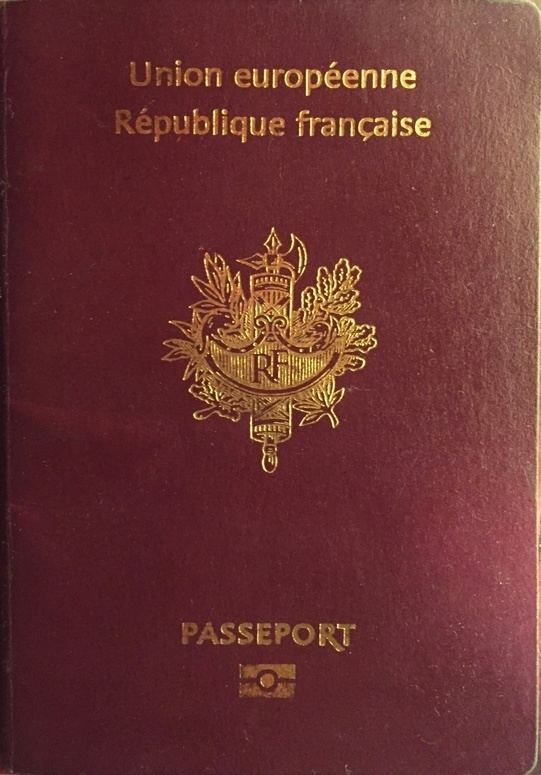
All of which is not to say that America is fascism free. Obviously not. Just that the above comment made me roll my eyes when there are so many better examples to cite, like the roving gangs of brownshirts disappearing people into nebulously legal holding centers.
cabbage@piefed.social 2 days ago
To a degree, fair enough. I hadn’t studied a French passport.
But also, it was always a symbol of the strength of the state through violence. It is fundamentally fascist in nature. When France still embraces it it’s the same France that is currently beating the shit out of schoolchildren and harming them for life for wanting to receive education. Like most western countries France has a huge cultural problem of state violence.
So I still think the historical use of this symbol does not align with pretending fascist ideology is something new in a society. And anyone giving France a pass is not paying attention.
redhorsejacket@lemmy.world 1 day ago
I don’t disagree with you in any particular part, and almost wrote a paragraph clarifying that the swastika and fasces are not 1:1 equivalences specifically because the Nazis divorced the swastika from its original meaning for their own purposes, while the Fascists selected the fasces as their core symbol because of its already established symbolism.
However, you can understand that the circular logic of calling something “fascist” which predates the codification of “Fascism” is doing my head in. If you want to counter that that’s a semantic argument which doesn’t invalidate your point, I tend to agree, with the significant caveat that this entire discussion is semantic in nature, so it’s more relevant than usual.
Long story short, I don’t equate every example of a state using violence to achieve its purpose as fascism, though it’s certainly a necessary ingredient, so I won’t yuck your yums if you do. To me, a war memorial is an appropriate venue for the fasces to appear, given its martial and reflective nature (as in, reflecting on the past), whereas including a fasces as the centerpiece of the nation’s diplomatic emblem is significantly more concerning as a forward looking statement of intent (so to speak).
cabbage@piefed.social 1 day ago
Yeah, I was a bit on the fence writing my comment without getting into these nuances themselves, so fair game. To me, independently of whether state sanctioned violence can be legitimate, the celebration of it that is inherent to the fasces makes it impossible to distinguish the symbol from the ideology. This is not very surprising considering that the ideology is named after the symbol.
I don’t disagree with your point though. The symbol was in all likelihood not used to mirror the emerging political trends in Europe, but as a symbol in its own right. But nevertheless I maintain that any main that carved fasces into marble a hundred years ago cannot legitimately claim fascism to be a foreign ideology.